
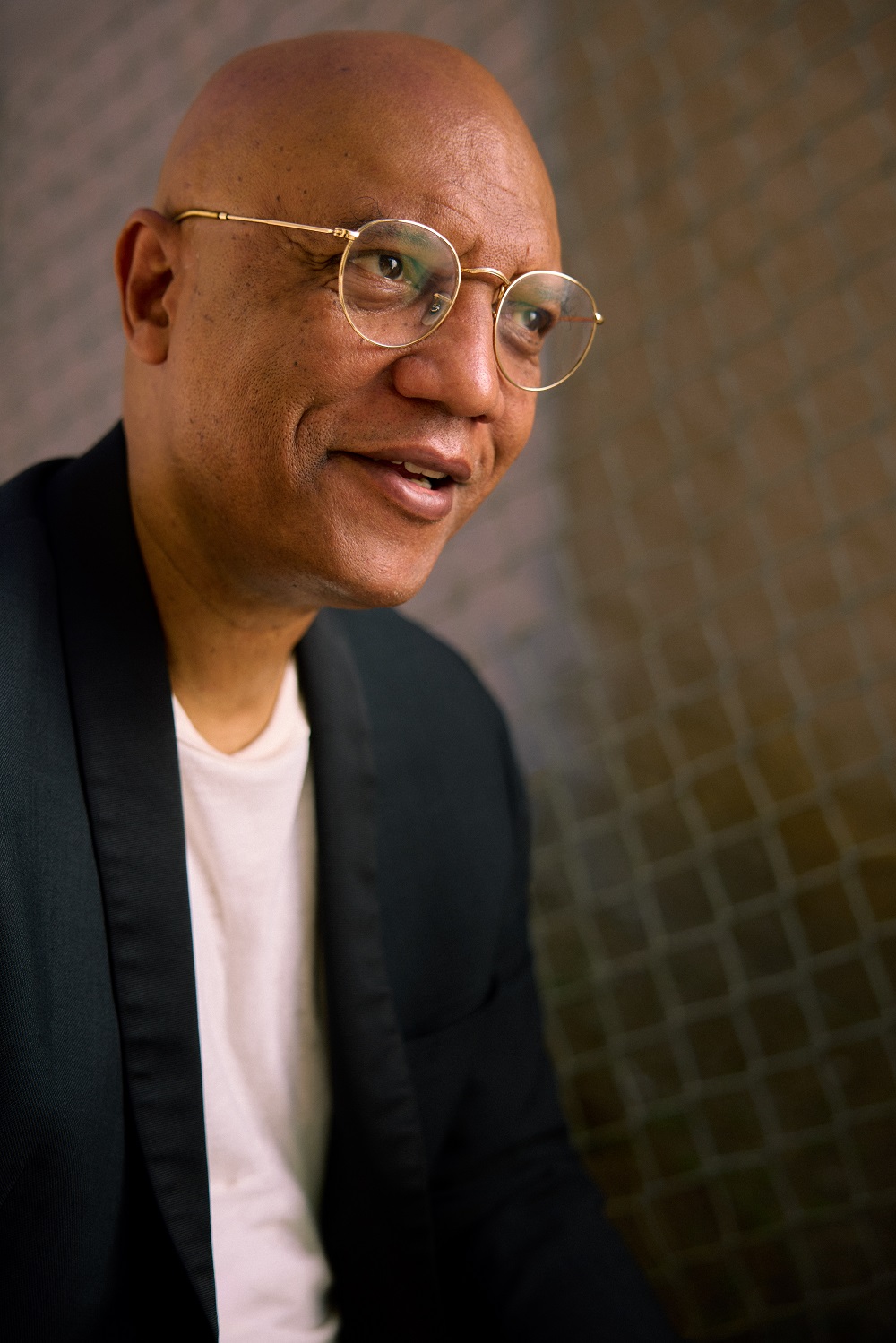
Artists face a daunting path in proving themselves to be masters of a single genre. Remarkably, Billy Childs has ascended to those heights in two distinct and demanding styles, recognized as an original and in-demand classical music composer while at the same time maintaining an eminent reputation as an adept and deeply swinging jazz pianist and composer.
Along the way, Childs has garnered six GRAMMY® Awards and an astounding seventeen nominations, while receiving commissions from such esteemed ensembles as the Kronos Quartet, the Detroit Symphony Orchestra under the baton of Leonard Slatkin, Esa-Pekka Salonen and the Los Angeles Philharmonic, the National Symphony, the Orpheus Orchestra, the Lincoln Center Jazz Orchestra, and the American Brass Quintet. His works have been performed at Carnegie Hall, Kennedy Center, and Disney Concert Hall.
Childs brought those two worlds together with a series of ambitious releases in the early 2000s, including a pair of Grammy-winning albums by his Jazz Chamber Music ensemble, and an ambitious and critically acclaimed tribute to the singer-songwriter Laura Nyro.
Since signing with Mack Avenue in 2017, Childs has once again had an outlet to showcase his estimable abilities as a pure jazz pianist and composer. His debut album for the label, Rebirth, earned him his first-ever Grammy for Best Jazz Instrumental Album. That was followed by two subsequent releases – Acceptance (2020) and The Winds of Change (2023) – all built around a core quartet.
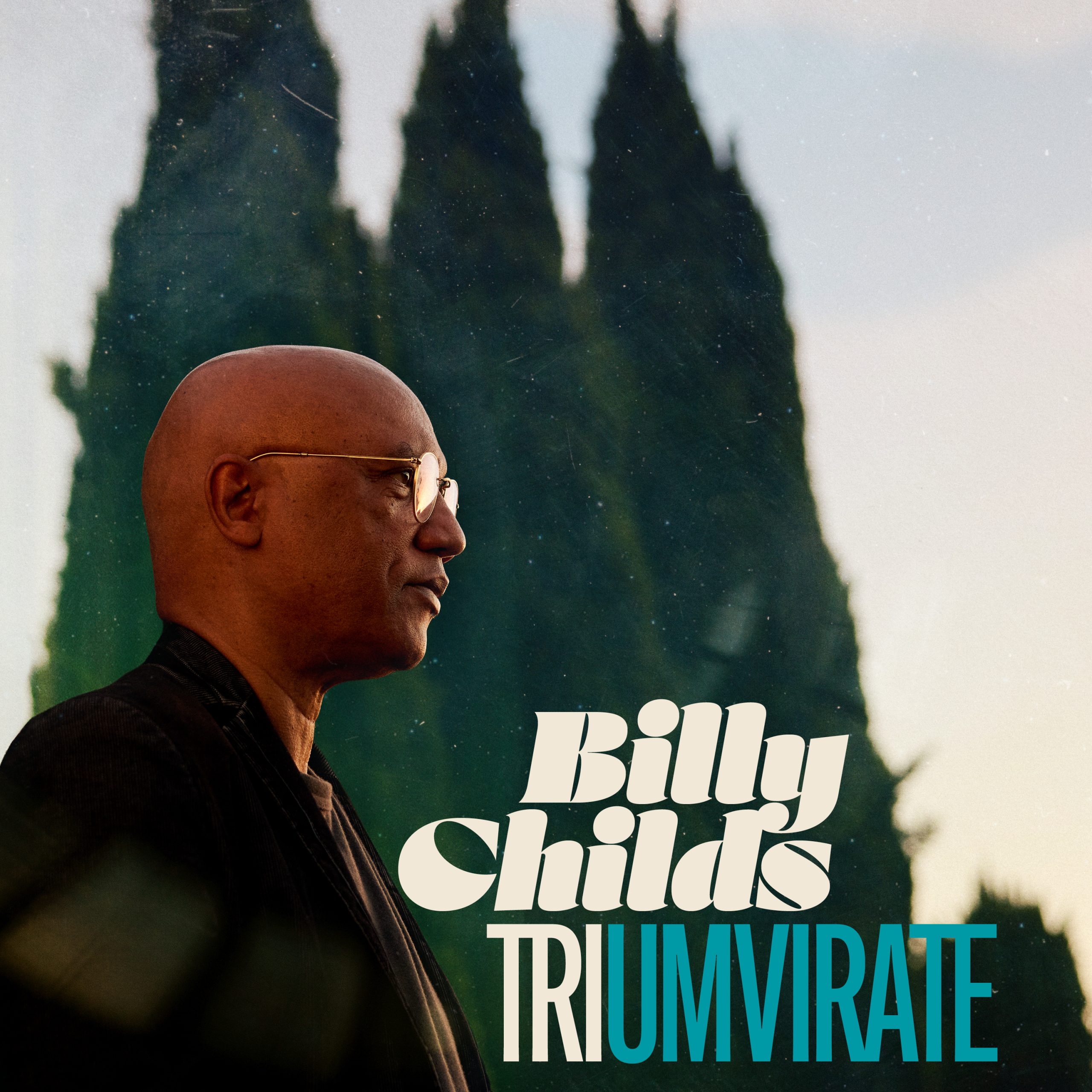
With his fourth Mack Avenue outing, Triumvirate, Childs pares down to an even more intimate setting, embarking on his first trio recording in 25 years. “I love playing in the trio format,” he exults, “but I’ve only done four in my entire career because I’ve spent so many years and so much time concentrating on composing.”
For the occasion, he has enlisted a pair of elite bandmates in bassist Matt Penman and drummer Ari Hoenig. A longtime member of the all-star SFJAZZ Collective, Penman has worked with such acclaimed names as John Scofield, Joe Lovano, Wayne Shorter, Kurt Rosenwinkel, Dave Douglas, Fred Hersch and Madeleine Peyroux, and co-founded the collective quartet James Farm with Joshua Redman, Aaron Parks and Eric Harland. Hoenig, known for his unusual and intense approach to drumming, has played extensively with a variety of groups, including Chris Potter Underground, Kurt Rosenwinkel Group, Joshua Redman Elastic band, Jazz Mandolin Project, and bands led by Wayne Krantz, Mike Stern, Richard Bona and Pat Martino.
While Childs hadn’t recorded with either musician in the past, they had formed the rhythm section for quartets featuring such frontline players as Steve Wilson, Chris Potter, or Sean Jones. During the course of those gigs, they would typically include a trio number in the set.
“It always felt great,” Childs says. “I’d seen Ari play in some amazing trios, from his own trio with Gadi Lehavi and Ben Tiberio to bands with Kenny Werner or Jean-Michel Pilc. I was blown away by his sensitivity to the piano and his orchestrational style of drumming. Matt is just a magical player to work with. They both make music in a way that elevates a trio, so I said to myself, ‘I need to record with these people.’”
Penman and Hoenig join the ranks of stellar trios that Childs has assembled for his past recordings: Tony Dumas and Billy Kilson on 1993’s Portrait of a Player; Buster Williams and Carl Allen on Skim Coat in 1999; and George Mraz and Billy Hart the following year for the Herbie Hancock tribute Bedtime Stories.
In preparing the setlist for Triumvirate, Childs reached back into the repertoire from some of his earliest recordings on Windham Hill to find material that was ripe for revisiting. “Mack Avenue has allowed me to get back to a smaller group situation for the first time since those Windham Hill recordings,” Childs explains. “Part of the motivation for choosing these songs is that I regret that those albums are not more widely heard.”
The darting, probing opener “One Fleeting Instant,” first appeared on 1988’s Take for Example This… The insistent, synchronized punctuation that introduces the tune gives way to an intriguing sense of floating time under Childs’ mesmerizing solo, building in intensity, relieved by Hoenig’s characteristically sculptural turn. The tense “Like Father Like Son” is culled from 1989’s Twilight is Upon Us. Penman takes the first solo before launching into a brisk walk for Childs’ excursion.
The tender ballad “Heroes” is taken from Skim Coat, and showcases the sensitivity and lightness of touch that Penman and Hoenig are capable of, accompanying Childs’ gossamer cascades. The upbeat “Carefree” is a new contribution for the album, a jaunty businessman’s bounce inspired in part by Neal Hefti, another composer able to move fluidly between multiple genres.
The second half of the album is given over to classic pieces by composers that Childs admires. The pianist played “Whisper Not” with the late, great Benny Golson, and declared it “one of my favorite tunes ever. Like Horace Silver’s ‘Peace,’ it is one of those tunes that is deceptively simple but logical. It’s like one of those Escher lithographs of a stairway to nowhere; it ends circling back to where it started in a way that takes you on a journey.”
Thelonious Monk’s “Ask Me Now,” which Childs recalls playing with saxophonist Joe Henderson, is taken at an achingly slow pace that emphasizes its contemplative beauty and provides ample space for Penman and Hoenig to interject with intricate filigrees, with the bassist soloing at his most eloquent. “Lazy Afternoon” is a John La Touche/Jerome Moross standard that has been recorded by everyone from Barbra Streisand to Cecil Taylor, though in this trio’s hands it is taken at a blistering pace that is anything but lazy.
Finally, Hoenig steps away as Childs and Penman engage in a breathtaking duo rendition of the Miles Davis/Bill Evans classic “Flamenco Sketches.” Though he of course learned the song from Kind of Blue, Childs recalls, “I played ‘Flamenco Sketches’ a lot with Chris Botti and always loved playing it. It’s a very intimate piece that I thought would allow me a chance to have a nice conversation with Matt.”
Since the word was first coined in the days of ancient Rome, Triumvirate has indicated a group of three, all holding equal power and responsibility. Such is certainly the case for this incredibly adaptable trio, each member contributing an integral share and each able to steer the sound in any direction from moment to moment – all of which makes this stellar album a long overdue and determinedly welcome return to the format for Childs.
“Matt and Ari are so forward thinking, but their roots are in the tradition of jazz,” he says. “Ari can pull out a Philly Joe bag or you can hear the Tony Williams or Elvin influences, but the voice is still Ari Hoenig. The same applies to Matt: you can hear the lineage of jazz, but it’s always ever evolving. It was a joy to record with them.”